Jantrayan

Effluent treatment plant

Also called: ETP, ETP plant, waste water treatment plant, textile ETP, dyeing ETP

Step 4 of 7: Dyeing

Tanks that balance, treat and settle the coloured waste water from dyeing before it is released.

Availability subject to feasibility check

Prices depend on the specification and the supplier. Request a quote.

Request a quote
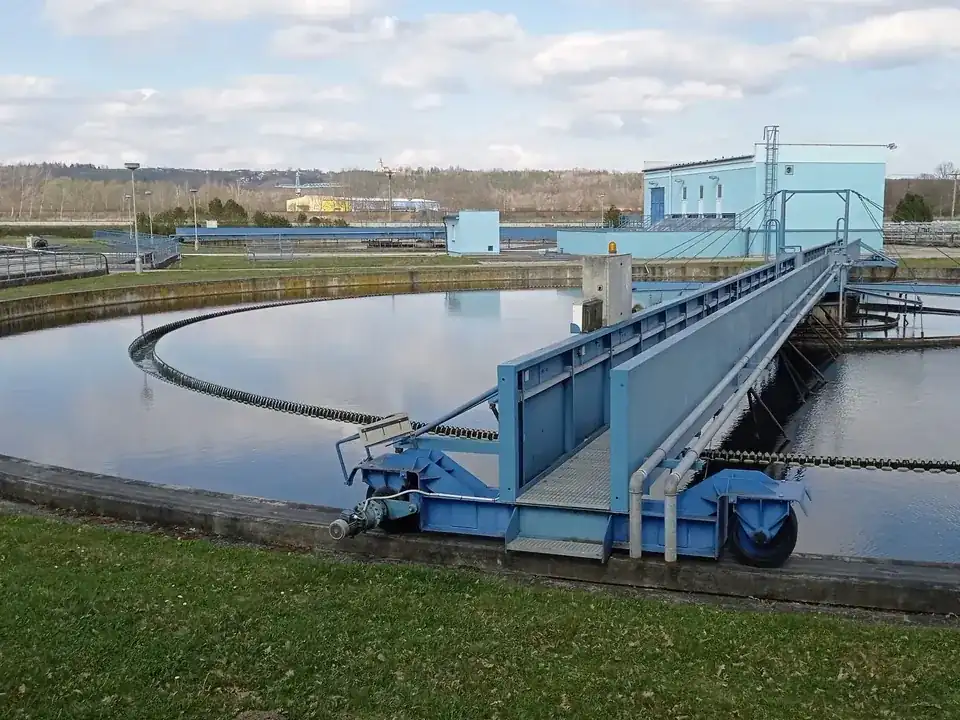
Example of a Effluent treatment plant
Example of this machine type, not a specific model we supply.Photo: Czeva, CC BY-SA 4.0, commons.wikimedia.org, edited

Effluent treatment plant: how it works

  1. Waste water from dyeing and washing passes through screens that catch lint and rags.
  2. An equalisation tank mixes hot and cold, strong and weak flows into one steady stream, and the pH is corrected.
  3. Chemicals make colour and fine solids clump together, or air is blown in so that bacteria break down the dissolved pollution; many plants do both.
  4. In a clarifier the solids settle as sludge and clear water flows over the top, often through a final filter.
  5. The treated water is tested and then released or reused; the sludge is thickened, pressed dry and taken away.

Main types

Physico-chemical ETP
Removes colour and solids with chemicals and settling. Quick to start, but it makes more sludge.
Biological ETP
Bacteria in aerated tanks digest the pollution. It uses fewer chemicals and makes less sludge, but it needs steady running.
Combined (biochemical) ETP
Chemical and biological steps one after the other. Common in dyeing factories.
Membrane and zero-discharge systems
Membranes and evaporation are added after the ETP, so that most of the water is recovered for reuse.

Where it fits in the process

It stands at the end of the wet processing section. Used water from dyeing, washing and printing flows in, and treated water and dewatered sludge come out.

The same machine in another industry: Leather & footwear

Effluent treatment plant price in Bangladesh: how to get a quote

We do not publish prices. The price of a machine depends on its specification, the supplier and the shipping terms, and it changes with the market. Tell us the points below: we check feasibility and the import rules, then send you a quotation.

What to tell us

  • How much waste water the factory makes in a day.
  • Where it comes from: dyeing, washing, printing or a mix.
  • A laboratory report of the untreated water, if you have one.
  • The discharge standard you must meet, or how much water you want to reuse.
  • The land you have for tanks, and any tanks already built.
  • A whole plant, or only equipment such as blowers, pumps, diffusers or a filter press.
Request a quote

Common questions

What is an ETP plant?

ETP stands for effluent treatment plant: a set of tanks and equipment that cleans a factory's waste water before it is released or reused. In a textile factory it takes out the colour, chemicals and solids left by dyeing and washing.

What is the difference between a biological and a chemical ETP?

A chemical plant adds coagulants that pull colour and solids out as sludge. A biological plant grows bacteria that eat the dissolved pollution. Chemical treatment reacts fast to changes in the water; biological treatment uses fewer chemicals but must run without long stops.

What is the price of an ETP plant in Bangladesh?

We do not publish prices, and an ETP has no standard price: each plant is designed for one factory. The cost depends on the daily volume, how polluted the water is, the type of treatment, and how much is civil work and how much is equipment. Send us the points listed above and we will quote.

More machines in this step: Dyeing

  • Fabric dyeing machine

    A closed vessel where fabric circulates in hot dye liquor, driven by a jet of liquor or a turning winch, until the colour is even.

    Availability subject to feasibility check

    Request this machine